Improving Breeding Practices and Breed Management
Key Takeaway: Reducing the frequency of genetic diseases such as idiopathic epilepsy in breeds with small populations is difficult, but there are a number of breeding practices that can help.
Idiopathic epilepsy is a complex disease which will continue to be a problem until geneticists crack the genetic code and DNA testing can identify carriers. But until then breeders can’t just throw up our collective hands and continue doing what we’ve all been doing. Perpetuating many common breeding practices won’t help our breed become more healthy. Based on recent history, it is more likely to do just the opposite. The breeding practices that follow below require self-discipline and a bit of work, but together our actions…or lack thereof…today will shape our breed for generations. So, what do we all want our legacy to be? Maintain the status quo and let implex and all the genetic diseases associated with an inbred population continue to get worse? Or do we take action now to help improve the overall health of the breed and, in the process, minimize cases of idiopathic epilepsy?
Before we outline the breeding practices we recommend based on our research into idiopathic epilepsy we should review the key points of Understanding Canine Epilepsy Parts I – V.
Part I: What is Canine Epilepsy?
Key Takeaway: There are 3 types of canine epilepsy, with Idiopathic Epilepsy being the most commonly diagnosed.
Fast Facts
- Epilepsy is a term used to describe repeated episodes of seizures.
- Seizures can range from minor, almost unnoticeable behaviors, to severe Grand Mal clusters.
- There are three types of canine epilepsy…Reactive, Structural and Idiopathic.
- Idiopathic epilepsy is the most commonly diagnosed type of canine epilepsy.
- Dogs with idiopathic epilepsy typically have their first seizure between 6 months and 6 years of age.
Part II: How Common is Canine Epilepsy?
Key Takeaway: Canine epilepsy, or seizure disorders, affect all breeds, including mixed breeds.
Fast Facts
- Canine epilepsy occurs in EVERY breed of dog.
- On average 1% of all dogs/breeds globally are affected by canine epilepsy.
- Purebred dogs tend to have a higher incidence of canine epilepsy than mixed breeds.
- Regardless of anything anyone tells you, your breed/bloodline is not immune.
- Statistically, it’s likely that ~2 Picardy Spaniels will be affected by epilepsy every year.
Part III: The Genetics of Idiopathic Epilepsy
Key Takeaway: No single dog is responsible for idiopathic epilepsy occurring in their progeny.
Fast Facts
- No single dog can cause idiopathic epilepsy in their progeny.
- Multiple genes from two dogs/bloodlines are required for idiopathic epilepsy to occur.
- The genetic interactions responsible for idiopathic epilepsy in dogs are so complicated that scientists haven’t yet unlocked the genetic code.
- Currently there is no genetic test that can determine whether a dog carries the genes that cause idiopathic epilepsy.
- Every year, in every breed, carriers and/or dogs that will develop idiopathic epilepsy are unknowingly being bred.
Part IV: The Impact of Implex
Key Takeaway: It is difficult to reduce the risk of idiopathic epilepsy, especially in breeds with small populations.
Key Takeaway: Canine epilepsy, or seizure disorders, affect all breeds, including mixed breeds.
Fast Facts
- Breeds with small populations have an increased risk of recessive genetic diseases occurring.
- Inbreeding and line breeding are the same thing from a genetic perspective.
- Inbreeding increases the risk of recessive genes aligning in a litter AND the probability that recessive genes will continue on in a breed for decades.
- Popular sire syndrome can significantly influence the genetic makeup and physical attributes of a breed for decades, if not longer.
- Implex, or pedigree collapse, is a result of short-term breeding decisions…planned and unplanned.
Part V: A Breeder’s Conundrum
Key Takeaway: Even breeders with well-planned and carefully researched pairings can produce puppies that develop idiopathic epilepsy.
Fast Facts
- Many breeders are either underinformed or uninformed when it comes to the frequency of idiopathic epilepsy in their breed.
- Lack of transparency and public dissemination of information about dogs that have had seizures makes it difficult for breeders to know which dogs might be carriers of the genetics associated with idiopathic epilepsy
- Inadequate and/or incomplete testing of a dog can result in an incorrect diagnosis of idiopathic epilepsy.
- There are risks in breeding young dogs, but there are also risks in waiting until dogs are older.
- Removing dogs whose littermates have had seizures from the gene pool is difficult and may actually contribute to implex in the population.

Breeding practices that EVERY breeder of Picardy Spaniels can adopt immediately to help improve the overall health of our breed:
- Plan Ahead. Waiting until your bitch is in heat to look for a sire results in a rush to find a stud dog. And rarely is the best possible match nearby and available on short notice. Breeding to the closest male available is easier and costs less, but rarely in life are the easiest and cheapest endeavors the best from a long-term perspective. This holds true when breeding dogs. Track the timing of heat cycles and start researching potential sires at least 6 months ahead of your planned breeding date.
- Ask for Help. Producing the best litter possible requires due diligence on the part of any breeder. Talk to other breeders and your breed warden…if you have one…about your bitch and your expectations for the puppies she will produce. Multiple perspectives will help you determine what sires you should consider. Start having these conversations as soon as you start thinking about breeding your bitch as these discussions may help direct you to the best options for a sire, saving you some time.
- Collect Data. Opinions are a great starting point for selecting a sire, but gathering and reviewing data on each prospective sire will help you get closer to selecting the right sire for your bitch. Objectively comparing your bitch to the breed standard is a great starting point. If she’s at the top end of the breed standard for height, breeding her to a sire that is also tall probably isn’t the best match. Similarly you need to evaluate structure, bites, hunt test scores, HD and ED scores, COI, etc. as part of your decision-making process when selecting a sire. All of this takes time, which is why planning ahead and asking for help is key.
- Review Pedigrees. Studying pedigrees and using virtual mating software is very helpful, but only to the extent of the number of generations used. Both 5-gen and 8-gen pedigrees significantly understate COI, and neither provides enough historical information to show the impact implex may have on a proposed breeding. Reviewing pedigrees of top sire prospects and using 8-gen virtual mating software takes time and effort, but that’s the only way to determine the risk of recessive genes coming from both the dam and sire side of a mating.
- Utilize Genetic Testing. DNA analysis will help ensure that you aren’t breeding a carrier to a carrier of a myriad of recessive genetic traits, including yellow coat color, NCL, juvenile cataracts, copper toxicosis, etc. Genetic testing will also provide an accurate COI…software packages can only provide mathematical estimates. In addition, many DNA testing companies have virtual mating software based on the actual genetics of both dogs. The tests are relatively inexpensive…much more so than vet bills can be if carriers are bred and one or more pups ends up with a genetic disorder that could’ve easily been prevented.
- Meet the Best Candidates in Person. Nothing beats putting your hands on a dog. Reviewing pictures and videos are helpful, but nothing beats putting your hands on a dog. Yes, we meant to say that twice… By meeting potential sires ahead of making a selection you are able to assess both quantitative and qualitative traits. Qualitative traits, such as demeanor, structure and friendliness are just as important as implex data, HD and ED scores, hunt test scores, etc. That said, by all means attend a training day, hunt test, or better yet, hunt behind potential sires. We never breed to a sire we haven’t hunted behind.
- Eliminate Line Breeding. Don’t breed dogs that share the same parents, grandparents or great grandparents. And if it’s possible great, great grandparents. We can’t change inbreeding caused by historical linebreeding decisions, but by making better breeding decisions today future breeders may not have to deal with genetic complications caused by implex. In breeds with small populations the breeding choices we make today will echo throughout our breed for decades. Just don’t do it! For the good of our breed.
- Eliminate Popular Sire Syndrome. The number of puppies sired by Manny, Nox, Justus and Iron over the past ~10 years means their genetics will…like Pacha’s…reverberate through 10-gen Picardy Spaniel pedigrees for the next 40-50 years. And there’s nothing any of us can do about it now…other than to stop breeding sires to the same degree going forward. How? By limiting the total number of litters any male can sire to 5. Fewer would be better, but there’s simply not enough unrelated males available in the global gene pool at this time.
- Invest Wisely. Just like any other business venture or hobby there’s an up-front investment that goes along with breeding. If you’re going to breed a bitch, whether breeding is your livelihood or you simply want a puppy from that special dog, you should commit to doing it right. And doing it right will require up-front costs in terms of time and money. Most breeders claim they’re ‘not in it for the money…they’re in it for the dogs…’ That being the case, make good investments. It’s time for us all to ‘let our actions speak for our words,’ as the saying goes. For the good of our breed.
- Educate Owners, Breeders and Prospective Breeders. No one knows what they don’t know, so how can we expect anyone to breed responsibly going forward without accurate and important information? Dissemination of information regarding sound breeding practices that will improve the overall health of the breed is not just the responsibility of breed clubs, but it should start there. Because every breed club has a registry of Picardy Spaniels and their owners, including contact information. And most breed clubs administer social media accounts that are followed by Picardy Spaniel owners. That said, we all need to help people understand why breeding to the closest, most convenient sire is rarely the right decision. And why certain dogs shouldn’t be bred. And why they should transition to breeding practices that will reduce implex and the likelihood and/or frequency of genetic diseases like idiopathic epilepsy.
Recommendations for the global Picardy Spaniel community:
- Embrace Transparency. Every breed has genetic health issues, including idiopathic epilepsy. Secrecy and suppression of health issues does not help our breed, it only perpetuates problems. The only way the global community can reduce the risk of health issues in Picardy Spaniels, including idiopathic epilepsy, is to openly acknowledge occurrences. And, then document all cases so researchers can determine likely causes and provide guidance for better breeding decisions going forward. The first step is to stop the practice of deleting social media posts publicly identifying Picardy Spaniels affected by canine epilepsy and/or other health issues.
- Implement a Global Registry. At the time of this post there are ~10 different registries for Picardy Spaniels, none of which proactively shares registrations with the others. A comprehensive global registry, including health problems, hunt test scores, dysplasia ratings, etc. can help breeders around the world make better breeding decisions. For the past 2 years the Dutch Club has been working on a global registry, but it takes a long time to confirm and record Picardy’s from so many different databases. Coordinating with them in terms of providing additional resources could help expedite the process, benefitting Picardy breeders around the world.
- Transition to 10-Generation Pedigrees. The use of 5-gen pedigrees to make breeding decisions does more harm than good in that it suggests that any single dog or future litter is genetically healthier than is actually the case. In addition, the impact of implex can be overlooked completely. Our Remi is a great example. Pacha doesn’t show up at all in her 5-gen pedigree, and only 22x in an 8-gen pedigree. But he appears 100x in her 10-gen pedigree! A single dog appearing 100x in a 10-gen pedigree is not common in any breed and is considered high risk inbreeding. The higher the number of appearances a single dog makes the greater the chance that recessive genes will be inherited by a puppy having that single dog repeatedly in both sides of their pedigree. And remember, the 10% COI rule is based on a 10-gen pedigree…
- Implement Globally Managed Breeding. The Cesky Fousek organization significantly improved their breed using this methodology. The Cesky is another rare breed that faced dwindling numbers and implex at various times since WWI. The use of regional boards to manage bloodlines through ‘lane breeding’ helped the Cesky become more healthy as a breed, and less genetically bottlenecked. The Picardy Spaniel could benefit greatly by adopting their methodology. Regional representatives…informal breed wardens…helping manage bloodlines and assisting breeders find ‘the right’ sires would be the first step in adopting this methodology. Together, the regional representatives could function as a ‘Global Breed Committee,’ whose primary goal would be improving the health of our breed.
- Sanction Strategic Outcrosses. Over the past 100 years the Picardy has had plenty of planned and unplanned outcrosses, and rumor has it they are still happening today. This isn’t necessarily a bad thing from a genetic perspective, but outcrosses should be made to benefit the entire breed, not just the goals of any one breeder. Strategic outcrosses should be well-planned and researched, and only the healthiest dogs should be crossed. Geneticists use the term ‘hybrid vigor’ to describe the genetic boost that accompanies proper outcrosses. Both the Cesky Fousek and Griffon have benefitted from strategic outcrosses, as did the Picardy Spaniel after WWII. Without the infusion of genes from Gordon Setters ~80 years ago the Picardy Spaniel would likely have become extinct as a breed.
The Picardy Spaniel is still relatively healthy for a rare breed, but if corrective action isn’t taken in the short-term, it’s highly likely that more and more health-related issues, such as idiopathic epilepsy, will arise. The longer the global community waits to take corrective action the longer it will be before implex and all the problems associated with implex are reversed. Course-correcting will require discipline, but if we can improve the long-term health of the breed it’s worth the effort. And every one of us can help the Picardy Spaniel become a healthier, less inbred breed. It will take decades after the genes are identified and tests are devised for idiopathic epilepsy to be removed from a breed…but only if breeders do their homework and put in the time and effort to breed dogs that aren’t carriers. We can’t wait for that day because who knows when it will come…and how much more inbred the Picardy Spaniel will be then. We can act now.
After a car accident took the life of a 16-year-old young man I knew a retired priest told everyone attending the funeral: “Don’t let your emotions dictate your actions.” It was sage advice then, and it continues to be today in many applications. What we all do next with respect to breeding practices is one of them. We ask that everyone consider this as you contemplate these recommendations. Don’t breed dogs that shouldn’t be bred. Breed with your head, not with your heart. That way the Picardy Spaniel will be in the best possible health for the next 100 years. We won’t be here to enjoy those dogs, but our grandchildren and great-grandchildren will…
What’s Next
Statistical modeling of pedigrees of epileptic dogs to generate guidelines any breeder can follow to reduce the risk of idiopathic epilepsy in their litter(s).
This series of posts wasn’t planned. It grew out of some research and a statistical analysis of 5-gen pedigrees of a number of Picardy Spaniels that died from idiopathic epilepsy. That analysis generated more questions and more research. During that timeframe a Picardy owner in Europe made posts on social media about her dog having seizures. Some of those posts were removed by admins, and some of the comments suggested that there were misunderstandings about canine epilepsy…some of the same ones we had prior to doing our research. So, we decided to write an article to help others learn more about canine epilepsy. Well, over 100 pages of notes doesn’t fit in one article and that’s how this series came about.
This will be the last part we post until sometime this winter when we hope to publish the findings of the 8-gen statistical modeling of litters with epileptic dogs, and also litters clear of canine epilepsy. We will not be identifying owners, breeders nor their dogs in that summary. But we will post a summary of the data along with any breeding guidelines that the statistics suggest will help reduce idiopathic epilepsy in our breed. Our hope is that the statistical modeling will help us identify bloodlines that are higher risk to cross…because no single dog nor bloodline causes idiopathic epilepsy. Apologies in advance for taking so long to do this, but 510 dogs must be researched, littermates identified, and then entered into a specific format for the statistical program. And then the results must be analyzed. Until then we will work as fast as we can, and we appreciate your patience in the interim.
A special thank you to everyone who helped make this series a reality.
Unfortunately we’ve had epilepsy in a litter of Picardy Spaniel puppies we’ve whelped, which is why we’ve decided to share the information we’ve uncovered about canine epilepsy. The publication of this series may be uncomfortable for some folks, but we are more concerned with the long-term health of our breed than about being politically correct. Our goal with this series on canine epilepsy is twofold.
- First, we want to share the information we’ve uncovered about canine epilepsy. Had we known a few years ago what we know now about canine epilepsy we would have made some different decisions with our dogs. Hopefully this series will help owners and breeders make more informed decisions about breeding and about the health of their dogs.
- Second, we want to figure out how best to minimize the risk of canine epilepsy in the Picardy Spaniel going forward. To try and achieve this goal we’re working with one of our puppy owners who is a biostatistician for a large US-based health care company. There is also a group in Europe that is working with a canine geneticist in Germany. We plan to share our data with the European group once we have run all the statistics and completed the pedigree modeling.
If you want to help, please email us directly if you own, have bred or otherwise know of a Picardy Spaniel that has epilepsy or has had seizures. Thank you in advance for your help. We not only need to be open and transparent about how great the Picardy Spaniel is, but also about any and all health issues if we are going to be good stewards of the breed. Our children, grand children, great grand children, etc. should be able to enjoy healthy Picardy Spaniels long after we’ve crossed the rainbow bridge.
Please feel free to email questions, comments and/or the names of any Picardy Spaniel affected by seizures to ricplath@gmail.com.
Reference Material Sourced From:
- University of Missouri Veterinary Health Center
- National Institute of Health (NIH)
- Cornell University College of Veterinary Medicine
- Tuft’s Canine and Feline Breeding Conference
- University of California – Davis
- Royal Veterinary College
- University of Manchester
- University of Helsinki
- University of Minnesota College of Veterinary Medicine
- Institute of Canine Biology
- My Epileptic Pet – Domes Pharma
- WebMd
- Genetics for Dog Breeders – Hutt
- Veterinary Partner
- Frontiers in Veterinary Science
- Double Helix Network News
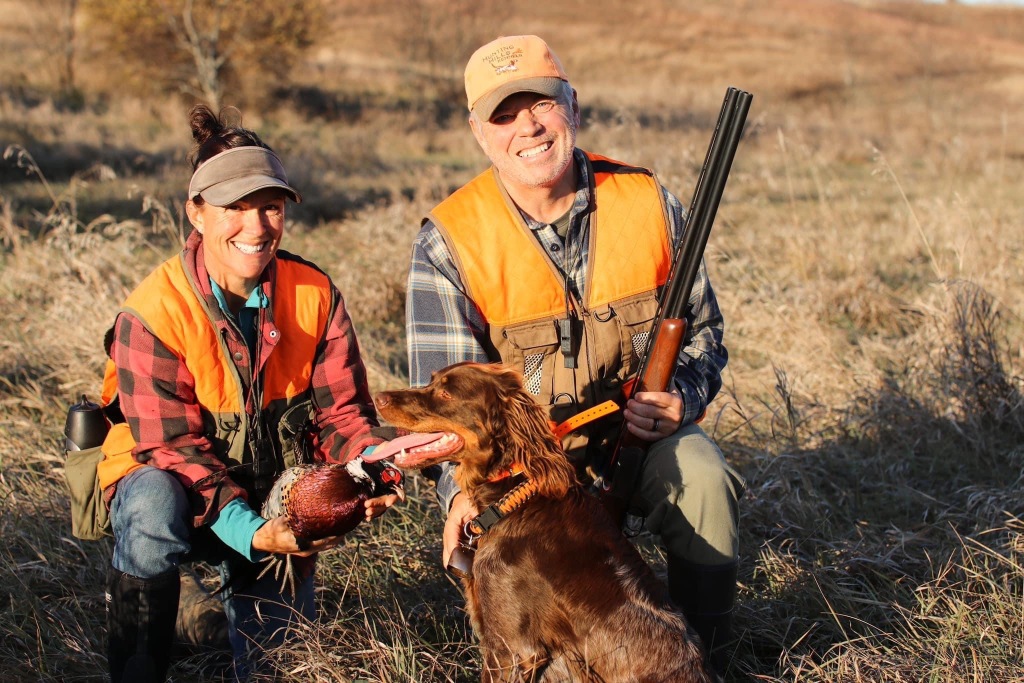
Ric, Ellen and their Picardy Pack live in Westby, WI. A lifelong hunter, Ric has trained and hunted Small Munsterlanders, Gordon Setters, and for the past 10 years Picardy Spaniels. Ellen has an extensive background in animal genetics and a PhD in Reproductive Physiology. She bred and trained Greater Swiss Mountain Dogs prior to Picardy Spaniels.