The Genetics of Idiopathic Epilepsy
Key Takeaway: No single dog is responsible for idiopathic epilepsy occurring in their progeny.

For the past 50+ years scientists, canine geneticists and veterinarians have been trying to figure out what causes idiopathic epilepsy. To date they’ve determined that genetics play a key role, but that no single gene causes this condition. The genes that trigger the condition are polygenic…meaning there are multiple genes that play a role…but no one knows for sure yet. Geneticists think idiopathic epilepsy is a ‘recessive autosomal disorder,’ which means both the sire and the dam need to be carriers of ALL of the genes that cause idiopathic epilepsy AND they both need to pass ALL of these genes on for a puppy to be affected. If it were otherwise there would be many more cases of canine epilepsy. In addition, it appears that certain environmental factors can ‘pile on’ by creating conditions that, combined with certain genetic combinations, result in idiopathic epilepsy.
With the exception of a few types of juvenile epilepsy, genetic testing cannot yet identify whether a dog is a carrier or susceptible to idiopathic epilepsy. Unfortunately, juvenile epilepsy is a relatively small piece of the canine epilepsy puzzle, so there’s still a good deal of work to be done. AI may be helpful at some point, or some researcher might finally unlock the genetic combination for idiopathic epilepsy, but until then there is no way to know for certain which dam should not be bred to which sire to prevent canine epilepsy. Further complicating matters, a dog that will develop idiopathic epilepsy may have been bred prior to having seizures. So every year carriers and affected dogs are unknowingly being bred, creating more carriers and, in some cases, dogs that will develop idiopathic epilepsy later in life.
Reminders
- There are 3 types of canine epilepsy, with Idiopathic Epilepsy being the most commonly diagnosed.
- Canine epilepsy, or seizure disorders, affect all breeds, including mixed breeds.
Fast Facts
- No single dog can cause idiopathic epilepsy in their progeny.
- Multiple genes from two dogs/bloodlines are required for idiopathic epilepsy to occur.
- The genetic interactions responsible for idiopathic epilepsy in dogs are so complicated that scientists haven’t yet unlocked the genetic code.
- Currently there is no genetic test that can determine whether a dog carries the genes that cause idiopathic epilepsy.
- Every year, in every breed, carriers and/or dogs that will develop idiopathic epilepsy are unknowingly being bred.
-read more-
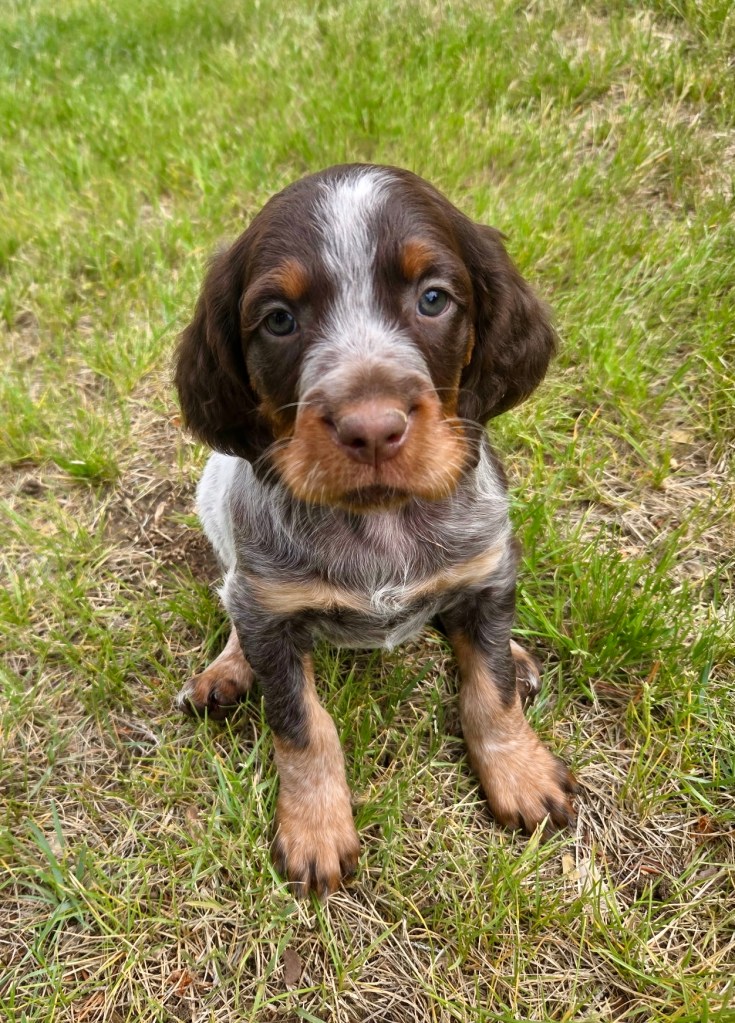
Every dog is supposed to have 39 pairs of chromosomes with an estimated 25,000 total genes. There can be exceptions, but they are rare, and dogs with abnormal chromosomal configurations typically die in utero or shortly after whelp. Contrary to what we learned in a high school biology class, relatively few of these 25,000 genes are absolutely dominant or recessive…where a single pair of genes determines a particular trait. Instead, some genes are complementary, meaning that they work together, while others can completely suppress the influence of other genes. There are also genetic linkages, codominant genes, modifying genes, epistatic genes, sex-limited genes, multi-allelic traits, etc. In fact, there’s more instances of incomplete dominance and polygenic traits than there are simple Mendelian dominance and isolated genetic traits.
Size is a great example of a polygenic trait influenced by multiple genes as well as environmental conditions. A gene called IGF1 is the most important single gene in determining the size of a dog…but there are about 20 genes in total that all work together to control size. So, the ‘boss gene’ acts as the master switch for size, but a cluster of ‘influencer genes’ fine tunes things…like a light switch being turned on and then a dimmer switch adjusting the light to the appropriate brightness. To further complicate matters, genetic interactions can vary by breed, and by environmental conditions. In the case of size, the breed and size of dam is an influencer of size as well. The conditions in utero…nutritional stress, or lack thereof, for example…is another environmental component that can influence canine genetics.
Idiopathic epilepsy cases are likely multi-allelic, including many of the various genetic interactions mentioned above. ‘Likely’ because we don’t know for sure. For decades universities and researchers around the world have been trying…unsuccessfully so far…to unlock the genetic combination(s) that cause canine epilepsy. Then there is the ‘possible’ influence of certain environmental conditions…hormones, chemical exposure, stressors, etc…which makes things even more challenging in terms of figuring out what causes canine epilepsy. It’s like trying to solve a Rubik’s Cube…which is hard enough for most of us…when you’re color blind and wearing oven mitts. And the more genes and genetic interactions involved, the more colors and sides of the puzzle there are to line up perfectly to solve the idiopathic epilepsy puzzle.
Benign Familial Juvenile Epilepsy, or BFJE, a type of juvenile canine epilepsy, is an autosomal recessive trait caused by a single gene…called LGI2…on a single chromosome. It is also the only form of canine epilepsy geneticists know of that is caused by a single gene…which is probably the reason that piece of the epilepsy puzzle has been figured out. Genetic testing can help breeders assess the risk of puppies being affected with BFJE, as well as the likelihood of an unaffected puppy passing an epileptic gene on to future generations. Here’s an example:
A breeder is interested in breeding his bitch Izzy to a stud dog, Hank, who lives just a couple hours away. Both are top notch hunting dogs that have excellent hips and meet the breed standard. Without any genetic testing the breeder risks producing puppies that will be affected by BFJE because he has no idea whether Hank or Izzy are carriers of the LGI2 gene. All he knows is that Hank and Izzy don’t have BFJE because dogs with this form of juvenile epilepsy start having seizures prior to 4 months of age. What the breeder will learn via genetic testing…the cost of which is ~US$125/dog…is whether Hank and Izzy are clear or carriers of the recessive form of the LGI2 gene. For this example we’ll use ‘L’ to represent the dominant LGI2 gene, and ‘l’ to represent the recessive LGI2 gene.
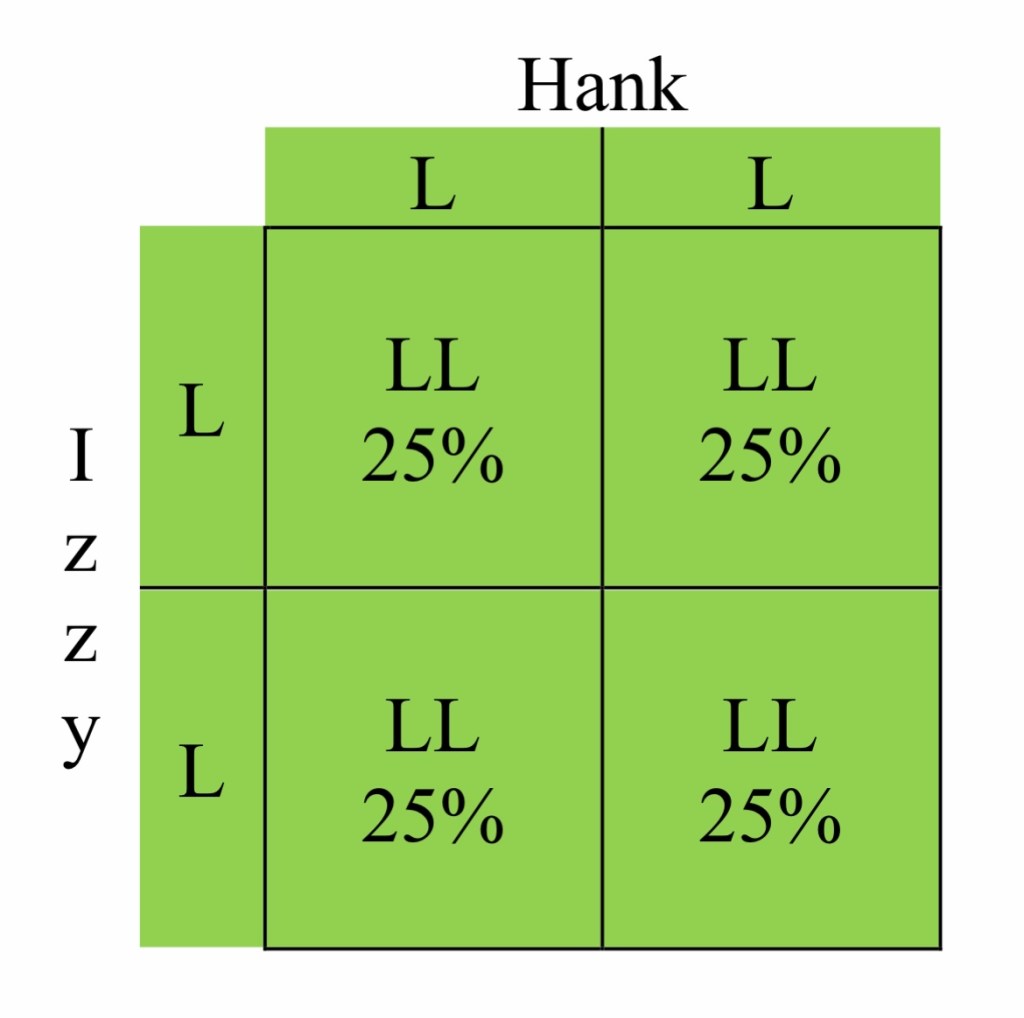
Scenario I
Genetic test results indicate that neither Hank nor Izzy carry the recessive ‘l’ gene. In this scenario 100% of Hank and Izzy’s puppies in this case will have ZERO RISK of developing BFJE, or being carriers of this type of epilepsy.
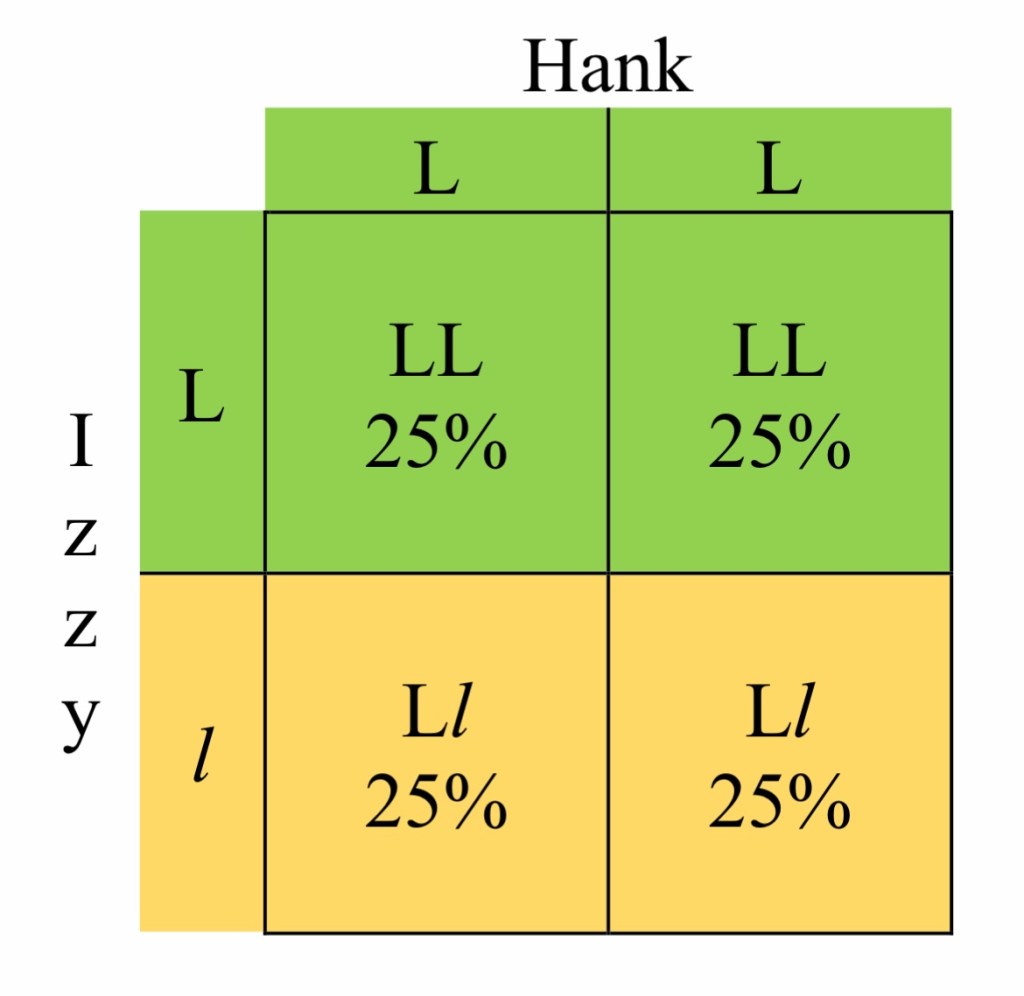
Scenario II
Genetic test results indicate that Hank is clear of the recessive ‘l’ gene, but Izzy is a carrier. The results are the same with either dog being the carrier, btw. In this scenario 100% of Hank and Izzy’s puppies have ZERO RISK of developing this form of juvenile epilepsy, BUT 50% will be carriers…so the disease quietly lives on in another generation.
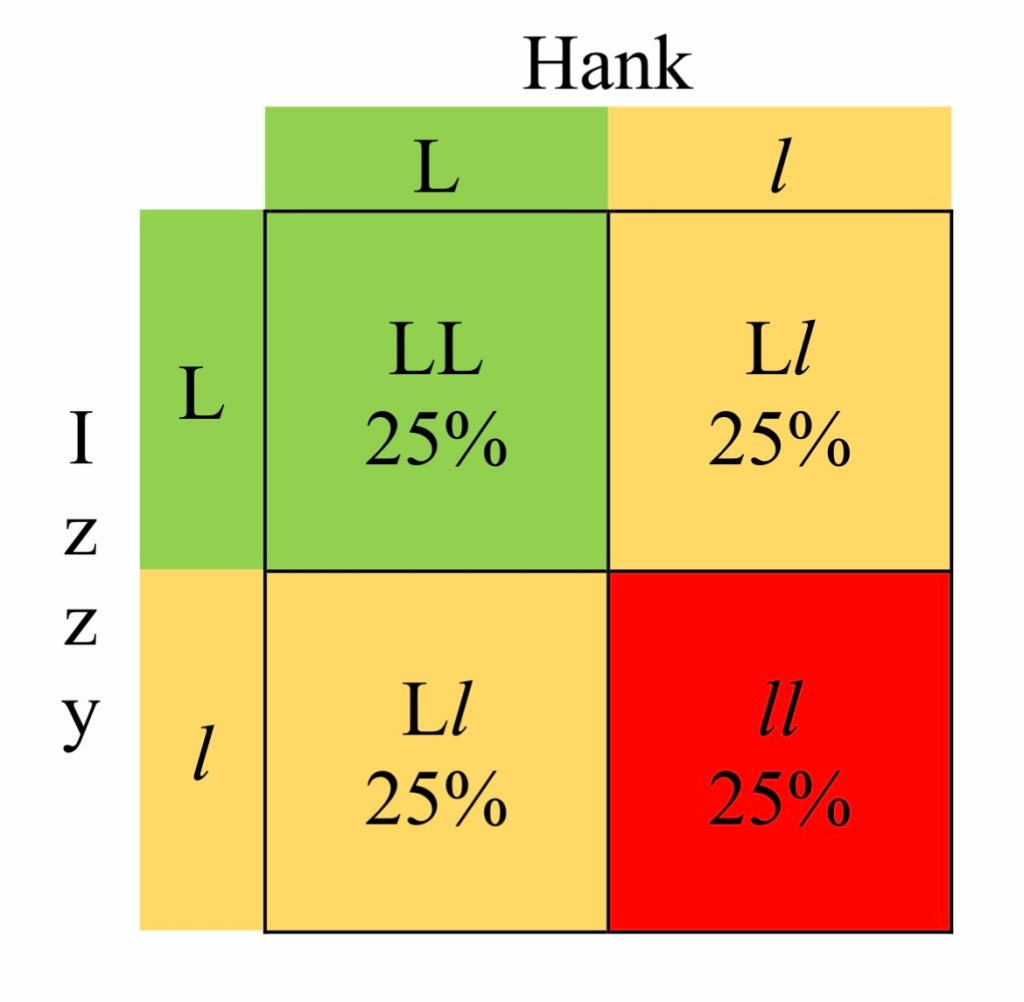
Scenario III
Genetic test results indicate both Hank and Izzy carry the recessive ‘l’ gene. In this scenario 25% of Hank and Izzy’s puppies have ZERO RISK of developing this form of juvenile epilepsy, 50% will be carriers, AND 25% will have seizures due to BFJE.
In reality, BFJE typically affects very few breeds, but this is a great example of how genetic testing could help prevent any single-gene, genetic disease in our four-legged friends. Epilepsy caused by BFJE could be completely eliminated if all breeders would employ genetic testing on all dams and sires prior to mating…and then only breed clear dogs. In principle that seems simple enough, but this would take generations, especially in rare breeds with relatively small/shallow gene pools. It would also take commitment and discipline on the part of breeders globally.
In Scenario III, where carriers of a single recessive gene on one chromosome and simple Mendelian dominance are bred, there are only 3 possible genetic outcomes for the puppies. But because idiopathic epilepsy is much more complex genetically let’s look at how genetic combinations for puppies increase if multiple genes are involved. The following is a real-world example showing the genetic interactions responsible for coat color in Labrador Retrievers.
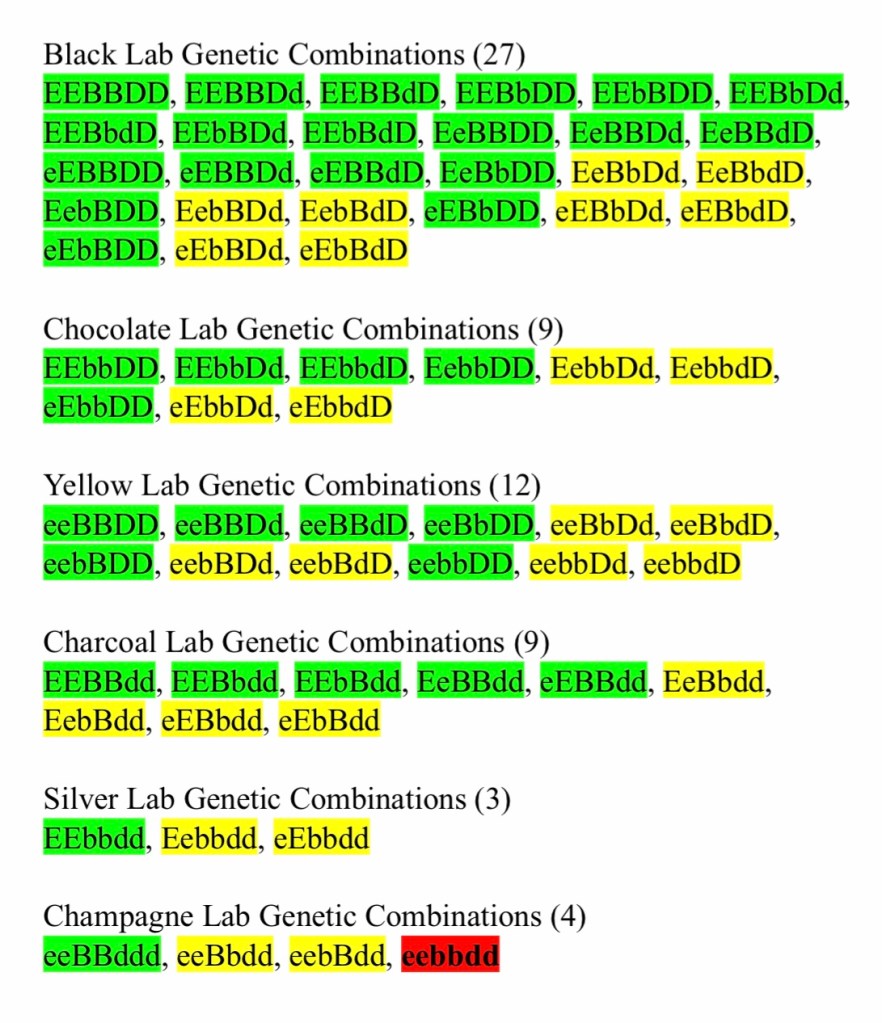
There’s a lot to take in with this graphic, but the most important takeaways are:
- The ‘eebbdd’ combination only occurs in 1/64, or ~2% of all puppies when carriers of all 3 of the recessive genes…e, b and d…are bred.
- IF these 3 genes were responsible for causing idiopathic epilepsy instead of coat color, any puppy that inherited all recessive forms of every gene…eebbdd…would be affected with idiopathic epilepsy.
- More importantly, breeding any of the 27 yellow-highlighted carrier dogs together could create the eebbdd…so over 42% of all possible genetic combinations could produce ‘eebbdd!’
- IF these 3 genes were responsible for causing idiopathic epilepsy in any breed…where there is no genetic test to identify carriers…there would always be a risk of breeding a carrier to a carrier.
The Labrador Retriever coat color example is one where 3 genes, one of which is epistatic, creating incomplete dominance in the other two, control coat color. Fortunately idiopathic epilepsy is more complicated genetically, because if it weren’t there would be a much higher incidence of idiopathic epilepsy in all breeds. But while the complexity helps in that manner, adding an additional genes to the equation, piling on one or more of the genetic idiosyncrasies mentioned earlier and adding the potential of environmental factors brings us back to trying to solve Rubik’s Cube when you’re color blind and wearing oven mitts. Complicating things further, because idiopathic epilepsy is likely multi-allelic and likely involves recessive genes and various types of genetic interactions, it can lie dormant for generations until a dam and a sire that are both carriers are bred. So, until they unlock the genetic code and develop genetic testing there will always some level of risk of breeding a carrier to a carrier. Even then, because of the way chromosomes divide to produce the genes that are carried by the sperm and egg…called meiosis…the genes that cause idiopathic epilepsy might not get passed on…which is another reason idiopathic epilepsy persists in every breed. More on that later in the series…
Unfortunately we’ve had epilepsy in a litter of Picardy Spaniel puppies we’ve whelped, which is why we’ve decided to share the information we’ve uncovered about canine epilepsy. The publication of this series may be uncomfortable for some folks, but we are more concerned with the long-term health of our breed than about being politically correct. Our goal with this series on canine epilepsy is twofold.
- First, we want to share the information we’ve uncovered about canine epilepsy. Had we known a few years ago what we know now about canine epilepsy we would have made some different decisions with our dogs. Hopefully this series will help owners and breeders make more informed decisions about breeding and about the health of their dogs.
- Second, we want to figure out how best to minimize the risk of canine epilepsy in the Picardy Spaniel going forward. To try and achieve this goal we’re working with one of our puppy owners who is a biostatistician for a large US-based health care company. There is also a group in Europe that is working with a canine geneticist in Germany. We plan to share our data with the European group once we have run all the statistics and completed the pedigree modeling.
If you want to help, please email us directly if you own, have bred or otherwise know of a Picardy Spaniel that has epilepsy or has had seizures. Thank you in advance for your help. We not only need to be open and transparent about how great the Picardy Spaniel is, but also about any and all health issues if we are going to be good stewards of the breed. Our children, grand children, great grand children, etc. should be able to enjoy healthy Picardy Spaniels long after we’ve crossed the rainbow bridge.
Please feel free to email questions, comments and/or the names of any Picardy Spaniel affected by seizures to ricplath@gmail.com.
Reference Material Sourced From:
- University of Missouri Veterinary Health Center
- National Institute of Health (NIH)
- Cornell University College of Veterinary Medicine
- Tuft’s Canine and Feline Breeding Conference
- University of California – Davis
- Royal Veterinary College
- University of Manchester
- University of Helsinki
- University of Minnesota College of Veterinary Medicine
- Institute of Canine Biology
- My Epileptic Pet – Domes Pharma
- WebMd
- Genetics for Dog Breeders – Hutt
- Veterinary Partner
- Frontiers in Veterinary Science
- Double Helix Network News
Ric, Ellen and their Picardy Pack live in Westby, WI. A lifelong hunter, Ric has trained and hunted Small Munsterlanders, Gordon Setters, and for the past 10 years Picardy Spaniels. Ellen has an extensive background in animal genetics and a PhD in Reproductive Physiology. She bred and trained Greater Swiss Mountain Dogs prior to Picardy Spaniels.