
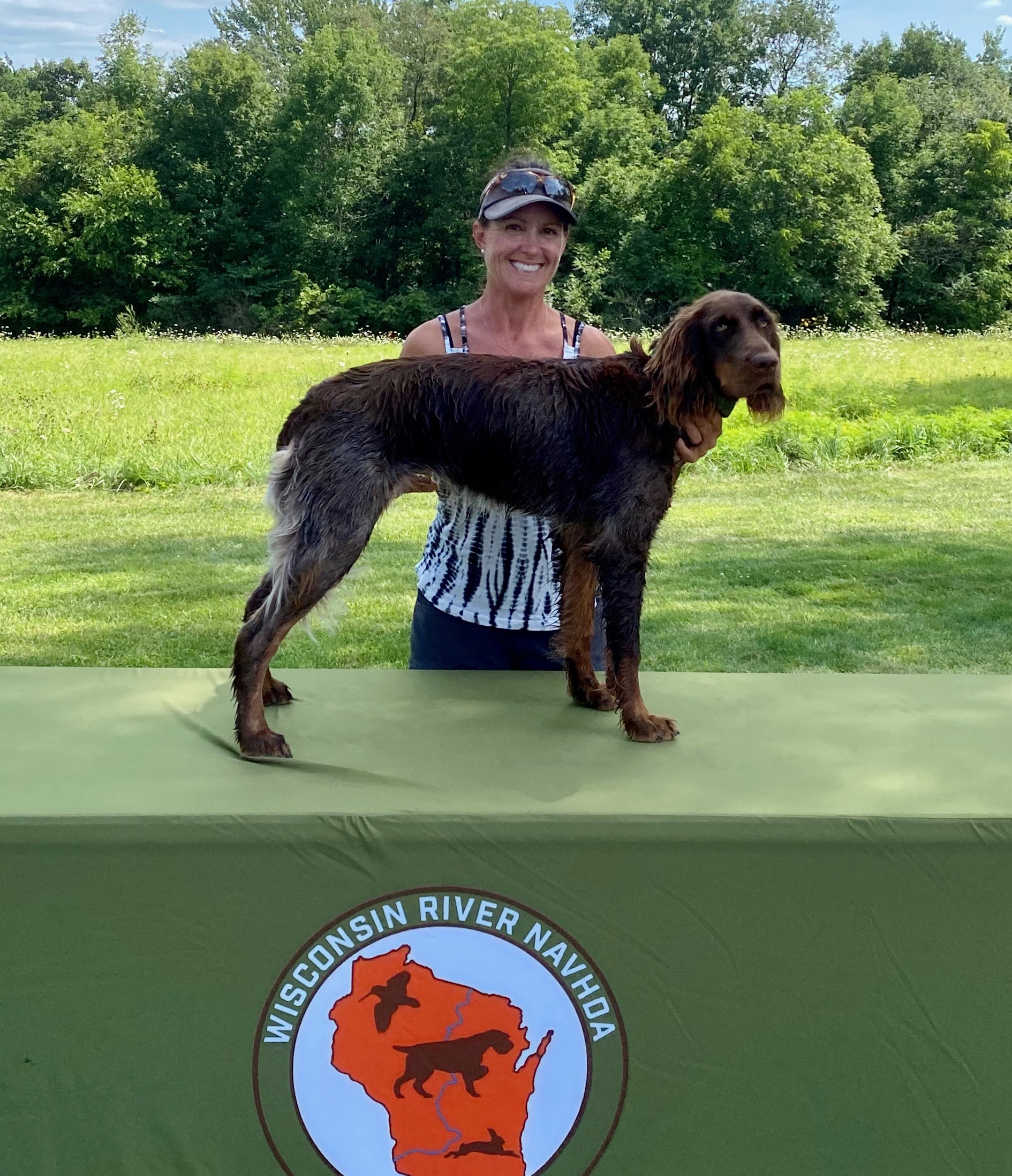
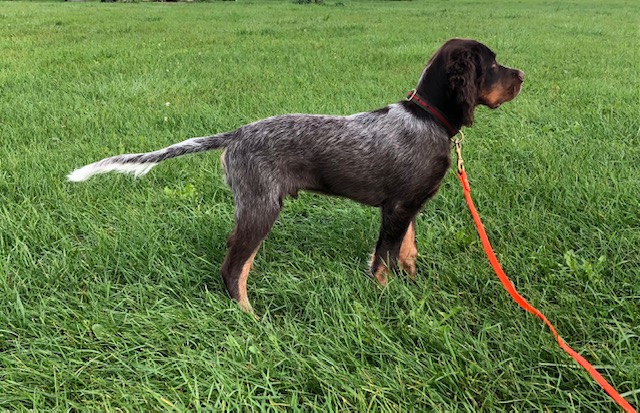
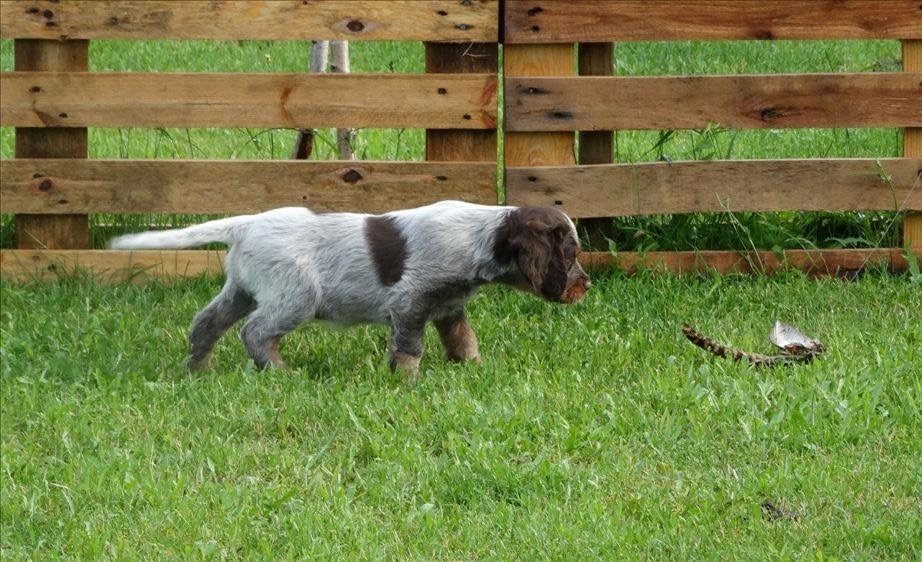
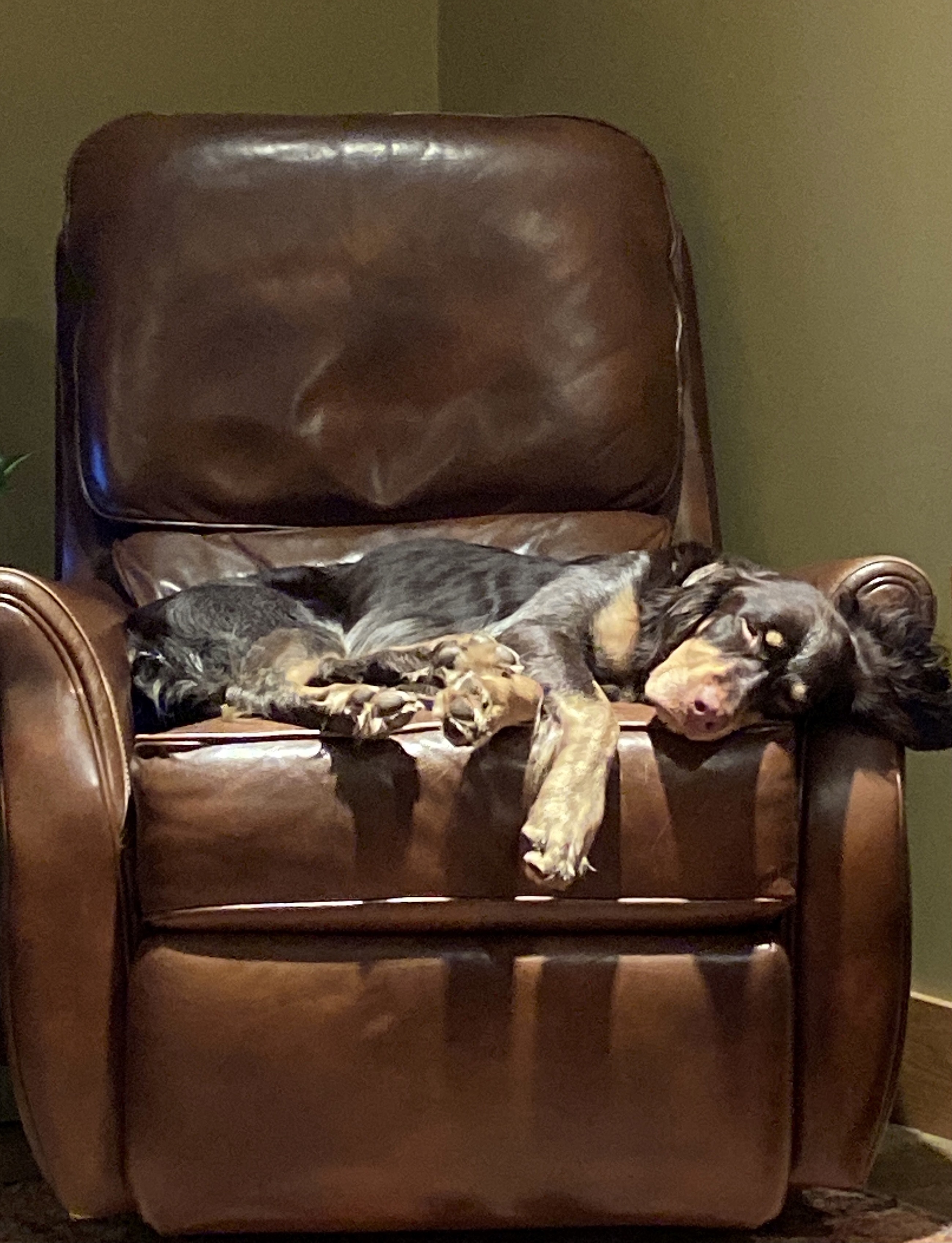
The Picardy Spaniel is a loving, even-keeled dog. They are a bit of an anomaly in that they are chill and laid back in the house and very energetic outside. Not many versatile hunting dogs have a “off switch,” but the Picardy Spaniel does. They’re just as happy hanging out on the couch as they are when they’re out hunting, running or playing. Picardy’s are athletic dogs that thrive with exercise and time afield. Said exercise can come in the form of several walks a day or a nice long off-leash run. Although a Picardy requires a good bit of exercise it needs to be calibrated to their age so undue stress isn’t put on developing joints and structure. The “10-minute/month” rule of thumb for puppies is best – no more than 10 minutes of exercise per session for every month of age. The breed is extremely affectionate and they bond strongly with their owners, preferring companionship to the solitude of a kennel. They are good with children but, as with any breed, they need to be socialized/introduced properly to kids. In general Picardy will be happy to give a child plenty of attention, and in some instances they will even keep watch over kids as if to keep them out of trouble. The Picardy Spaniel is no different than other breeds in that they should be socialized early on, to include children and people of all ages. Ever playful, a Picardy Spaniel will likely exhibit some puppy-like characteristics well into middle age, even after they’ve been bred.
Basic Training Rules for Picardy Spaniels
- Picardy Spaniels mature slowly. As someone I respect greatly once said: “Sometimes you need to go slow to go fast.” No matter how smart your puppy is, or you think s/he is, don’t overload him/her.
- Picardy Spaniels are fun-loving dogs. All work and no play doesn’t work with this breed. Period. We DO NOT recommend long, structured training sessions, but rather incorporating training into everyday enjoyable activities such as off-leash runs or backyard play.
- Picardy Spaniels bond strongly with their owners. Train them yourself. Or, with help from someone where you do the majority of the training, and who is open to training protocols that differ from “the way they’ve always trained dogs.” Most people in the US have never even met a Picardy Spaniel, much less trained one.
- Picardy Spaniels are extremely food motivated. A pocketful of treats goes a long ways in terms of helping your puppy understand the tasks and behavior you expect.
- Picardy Spaniels are “sensitive” dogs. Yelling, swatting and force-based training techniques tend to cause this breed to shut down, ignore you and/or refuse to do what you are asking them to do.
- Picardy Spaniels are smart. If they’re not learning what you’re trying to teach see above.
- Training guides with methodologies that work well with Picardy Spaniels:
- How to Teach Gundogs to Train Themselves by Joan Bailey
- Tips and Tales for Training Your Bird Dog by George DeCosta Jr.
For the most part the Picardy Spaniel is a cooperative, obedient dog, but there can be instances of independence as well. Fortunately, the Picardy gravitates more towards wanting to please their owner(s) than willfullness. As with most things Picardy there are some interesting nuances, including their attitude toward training. The Picardy is an intelligent and confident dog, but they are also slow maturing dog. This may sound counterintuitive, and it routinely makes training a bit of a balancing act in terms of “how much, how fast.” Picardy’s are willing and eager to learn, but the maturation lag can cause issues if they are pushed too fast. They tend to be sensitive, somewhat “soft” dogs, but they are also very food motivated. This combination makes the breed a strong candidate for positive reinforcement training methods. High-pressure training techniques are not well tolerated by the breed. Too much pressure, in a number of instances, has resulted in dogs that need a significant amount of remedial work to recover. Every Picardy is different of course, and the training speed and protocol used should be customized for each dog. Author Joan Bailey, in her book “How to Help Gundogs Train Themselves,” outlines one of the better training methodologies for Picardy’s. A slow, consistent approach, with short lessons incorporated into a normal day works best. Keeping training fun is also key as Picardy’s, like other French breeds, tend to get bored easily.
One of the characteristics that make the Picardy an outstanding versatile hunter is tremendous prey drive. They love doing what they were bred to do, and that’s hunt. As such Picardy’s should not be allowed to roam freely unsupervised. Even if it’s only a short potty break they should be supervised, leashed or contained within a fenced yard. Otherwise a Picardy will likely start scenting and searching as soon as they are finished with their business and before long they will be well out of earshot. Another trait that makes the Picardy a versatile hunting dog is their love of water. The topography of the Picardy region of France has a good bit of water, including rivers, marshes, lakes and estuaries. Their webbed feet make the Picardy is strong swimmer and they will often play in the water. Most Picardy’s have a pretty serious bark, but they’re not very good guard dogs as they tend to like most everyone they come in contact with. Some are more vocal than others, ranging from dogs that only bark when someone comes to the door to dogs that bark at every furred critter they see. The latter is likely an inherited trait and is highly valued in Europe where the breed is used to hunt all types of furred and feathered game. Barking while giving chase to a rabbit, fox or boar is called “sich laut” in German, and it let’s hunters know that the dog has sighted and is chasing game. The Picardy apparently inherited enough hound from historical outcrosses with the Gordon Setter to have an instinctive howl as well. Their infrequent, sad, “Snoopy-esque” howl is usually associated with some level of dissatisfaction with their owner…as in; “Why are you taking her for a walk? I want to go…”
 US Picardy Spaniel Alliance